Lubrication pumps have many main types. These incude manual, electric, pneumatic, ear, vane, piston, rotary, centrifugal, and centralized. Each type ofubrication pump has its own job.They help machines work welland lastlonger. The rightlubrication pump can make equipmentlast more years. It can alsohelp machines work better. Many factories use advanced lubrication systems. These systems gve the right amount of oil or grease. BAOTN has modern
centralized lubrication systems. These systems help keep important machine parts safe.
Key Takeaways
ubrication pumps move oilor grease to machine parts. This helps lower friction and stops damage. It makes machines last longer and work better.
There are many kinds of pumps. These incude manual, electric, pneumatic, gear, vane, piston, rotary, centrifugal, and centralized pumps. Each ype is
made for a special job or place.
Picking the right pump depends on a few things You need to think aboutmachine size and what kind of lubricant youuse. You also look at pressure needs
and where the machine works. Some places have saltwater or need automation.
Centralized lubrication systems save time. They give even lubrication to many parts. This makes machines safer and cuts down on maintenance
Using the right pump and system stops expensive repairs. It helps machines run well and last longer.
Lubrication Pumps Overview
What Is a Lubrication Pump?
Alubrication pump sends oilor grease to machine parts. It helps stop parts from rubbing too much. Many factories use diferent oil pumps to help machines
work wel. oil pumps can be big or small Some pumps need people to use them by had Others use power from electriciy or air. Lubricating pumps aremportantfor engnes. They help engines in cars,ships, and other marine machines. Oi pumps move ol through pipes and tubes. This helps keep machineparts cool and dean.In the marine word ol pumpsstop engnes from geting hurt Ships need strong pumps because they work in hard places. Marineengines use special oil pumps for saltwater and heavy work.
Tip: Lubrication pumps come in many shapes and sizes. Each kind is made for a different job, from small engines to big ships.
Why Lubrication Pumps Matter
Lubrication pumps keep machines safe and working wel. Without oil pumps,engines can get too hot or break. Marine engines have extra stress from longtrips and rough water. Oi pumps on ships mustwork allthe time. They help stop rust and wear. Lubricating pumps save money by stopping damage early. Inthe marine world,ol pumps help big ships,fishing boats, and cargo ships. Engine lubrication in marine engines must be strong and steady. Many ol pumpshelp with this job. Marne engneers check ol pumps often to make sure they work. Good lubricaton pumps mean fewer repars and ess time when machines stop working.
Oil pumps keep engines from getting too hot.
Lubricating pumps help lower repair costs.
Marine oil pumps do hard work at sea.
Types of Lubrication Pumps
Manual Lubrication Pumps
Manual ubrication pumps need people to work them by hand. Workers pull a lever or turn ahande to move ollor grease, hese pumps are good for smal
machines or places with no electricity. Manual lubrication systems let users decide how much lubricant to use.
How They Work:
Aworker puts ollor grease into the pump. The worker moves the hande up and down. This pushes lubricant through pipes to the right parts.
Advantages:
Easy to use
No power needed
Simple to fix
Disadvantages:
Needs people to work
Not for big machinesLubrication might not be even
Typical Applications:
Small tools in workshops
Light machines
Backup for other pumps
there is no power.
BAOTN has manual lubrcation pumps in their resistance ype olubrication systems and progressive grease lubrication systems. These pumps help when
Electric Lubrication Pumps
Electric lubrication pumps use motorsto move oilor grease. These pumps are good for places that need steady and automatic lubrication. Electriclubrication pumps can work at set times or when sensors say it is needed.
How They Work:
Amotor runs the pump. The pump takes oil or grease from a tank. It pushes the lubricant through pipes to machine parts.
Advantages:
orks automatically
Gives steady flow
Good for big machines
Disadvantages:
Needs electricity
More parts than manual pumps
Typical Applications:
CNC machines
Factory lines
Heavy equipment
BAOTNs elecrc lubrication pumps are importantin ther volumetric ol lubrication systems and progressive grease lubrication systems. These pumps help
machines run well with less work from people.
Pneumatic Lubrication Pumps
neumaticlubrication pumps use air to move ollor grease. These pumps are good in factories with air supply systems. Pneumatic lubrication pumps can
move thick lubricants and send them far.
How They Work:
Air goes into the pump. The air moves a piston or diaphragm. This pushes lubricant through the system.
Advantages:
Moves thick grease
Works in hard places
No electric sparks
Disadvantages:
Needs air supply
Can be loud
Typical Applications:
Mining machines
Food machines
Large presses
Gear, Vane, and Piston Pumps
Gear pumps, vane pumps, and piston pumps are three main oil pumps in lubrication systems. Each type moves lubricant in a different way.
Gear Pumps
Gear pumps have two gears thatfit together. When the gears turn,they trap oi between the teeth and the pump body. The oil moves from one side to the
other. Gear pumps are positive displacement pumps. They give a set amount of oil each turn.
Advantages:
Simple build
Works well
Handles many oils
Disadvantages:
Wears out with dirty oil
Not for very thick grease
Typical Applications:
Engine oil pumpsMachine tools
Hydraulic systems
Vane Pumps
Vane pumps have a rotor with vanes that slide in and ut. As the rotor turns, the vanes move and trap oil. This pushes oil through the pump. Vane pumps are
also positive displacement pumps.
Advantages:
Smooth flow
Quiet
Good for thin oils
Disadvantages:
Does not like dirt
Not for high pressure
Typical Applications:
Light machines
Printing presses
Small oil systems
Piston Pumps
Piston pumpsuse pistonsto move oilor grease. The piston moves back and forth in a clinder. This puls in lubricant and then pushes itout. Piston pumps are
positive displacement pumps and can handle high pressure.
Advantages
Handles high pressure
Gives exact amount
Works with oil or grease
Disadvantages:
More parts
Needs care often
Typical Applications:
High-pressure lubrication
Heavy machines
Centralized lubrication pumps
Rotary and Centrifugal Pumps
Rotary lubrication pumps and centrifugal pumps are two more oil pumps in lubrication systems.
Rotary Lubrication Pumps
Rotary lubrication pumps use spining parts to move oil. These pumps can be gear, vane, or screw types. Rotary lubrication pumps are good for steady oil flow.
Advantages:
Steady flow
Simple build
Works with many oils
Disadvantages:
Not for high pressure
Wears out with dirty oil
Typical Applications:
Oil circulation
Small engines
Machine tools
Centrifugal Pumps
Centrifugal pumps use a spinning impelerto move oil. The impeller throws oilout by centrifugal force. Centrifugal pumps are best for moving lots of oilat low
pressure.
Advantages:
Moves lots of oil
Strong and simple
Good for cooling
Disadvantages:
Not for thick grease
Not for high pressure
Typical Applications:
Big factories
Construction machines
Food plants
BAOTN is a leader in centralized lubrication pumps. Their systems incude voumetric ol lubrication systems, resistance type olubrication systems.
progressive grease lubrication systems, and oil air lubrication systems. These systems help factories keep machines running longer and safer.
Table: Comparison of Main Types of Oil Pumps
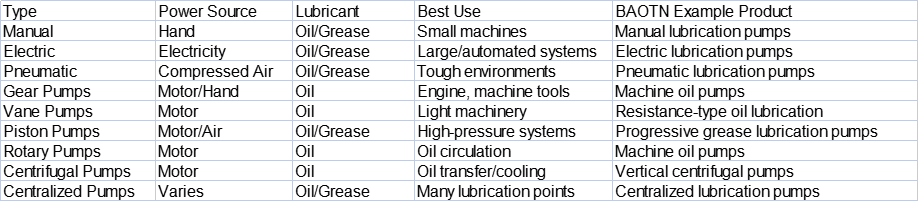
Tip: Picking the right lubrication pump helps machines last longer and work better. BAOTN has many lubrication systems for different factory needs.